Food delivery apps didn’t invent overeating, binge eating, emotional eating, or bad habits. What they did do is remove friction. They took the pause out of the process, the pause where you would normally check yourself, the pause where you might realise you’re not hungry, you’re stressed. They turned food into a button, and for anyone with an addictive personality or a stress-loaded life, that is a dangerous upgrade.
Convenience feels harmless because it’s marketed as self-care. “You’ve had a long day, treat yourself.” “Don’t cook, you deserve a break.” It sounds like kindness, and sometimes it is. But when convenience becomes a coping mechanism, it stops being a treat and becomes compulsion. It becomes something you do automatically when you feel uncomfortable, not because you’re hungry, but because you need relief.
In addiction treatment we see the same pattern in many forms. The object changes, alcohol, drugs, gambling, porn, shopping, doomscrolling. The mechanism stays the same, discomfort rises, the person reaches for a fast hit, the hit provides short relief, then the discomfort returns, often worse, and the cycle repeats. Food delivery fits perfectly into that loop because it’s fast, private, and instantly rewarding.
This isn’t about judging people for ordering food. People are busy. People are exhausted. People have kids. People work long hours. South Africa is not an easy environment. The point is to recognise when ordering is no longer a choice and has become a way to numb, distract, and avoid.
How convenience quietly rewires your habits
Before delivery apps, eating required effort. You had to plan. You had to shop. You had to cook, or at least leave the house to buy food. That effort created friction. Friction is what protects you from impulse. It gives you time to think, time to calm down, time to change your mind.
Now, if you feel stressed at 10pm, you can order in two minutes. You don’t have to face a person. You don’t have to drive anywhere. You don’t have to feel the physical act of handing over cash. It’s just numbers on a screen. That makes it easier to do repeatedly.
Convenience also creates habit loops quickly. If you order after a stressful day and feel relief, your brain learns that ordering equals comfort. The next stressful day arrives, and your brain remembers the shortcut. You don’t even think about alternatives because the habit is already forming.
And because delivery is so normal now, it doesn’t raise alarms early. People laugh about being addicted to Uber Eats. They call it “lazy.” They say “I’m just too tired.” They don’t realise that fatigue is exactly when addictions strengthen, because self-control is lower when your nervous system is depleted.
Ordering for relief, not hunger
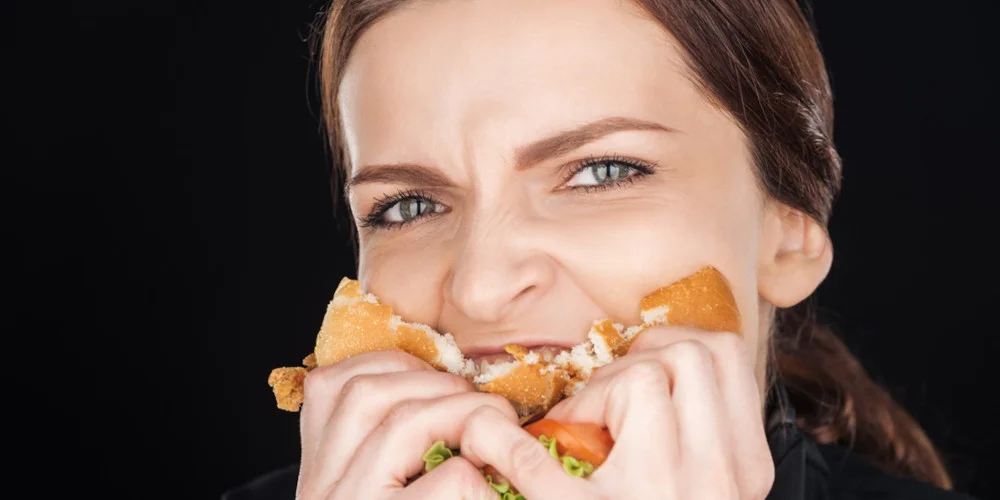
A lot of compulsive ordering is not driven by physical hunger. It’s driven by emotional hunger. Stress hunger. Loneliness hunger. Boredom hunger. Reward hunger. The desire for a hit at the end of a hard day.
People often order at night because night is when emotions catch up. The day slows down, the distractions fade, and the mind starts replaying everything. That is when anxiety and loneliness hit hardest. Ordering gives a sense of comfort and immediate reward. It gives the brain something predictable, food is coming, relief is coming. That anticipation is part of the hit.
This is why people sometimes order even when they’re already full. It’s not about the food. It’s about the feeling. It’s about the ritual. It’s about the moment of comfort. And because it’s a ritual, the brain treats it like medicine.
The problem is that the comfort fades quickly. After the meal, many people feel guilt, shame, bloated discomfort, financial stress, and frustration with themselves. Those feelings are uncomfortable. The brain wants to escape them. So the cycle continues.
The financial creep that makes people feel trapped
Compulsive delivery is expensive. Not just the meal price, the delivery fee, service fee, tips, and inflated menu prices add up fast. People often don’t notice the total because it’s spread out across multiple small purchases. Just like BNPL, the smaller numbers keep the behaviour feeling manageable.
Then someone checks their bank statement and feels sick. Or they realise they could have paid off debt, bought groceries, saved for something meaningful. That realisation creates shame. Shame triggers more ordering because ordering is how they cope with shame.
This financial creep can also create relationship conflict. A partner might feel disrespected if money is being spent impulsively. The person ordering feels judged. The argument becomes about discipline and responsibility. Underneath, it’s about emotional coping and secrecy.
If someone starts hiding order history, deleting receipts, lying about how often they order, or ordering in secret, that is when it crosses into addiction territory. Secrecy is always a signal.
Why delivery apps are perfect for compulsive personalities
Delivery apps combine three things that make compulsive behaviour grow, speed, privacy, and endless choice. Speed means you can act on impulse before it fades. Privacy means no one sees how often you do it. Endless choice means you can always find something that fits the mood you’re in, comfort food, spicy food, sweet food, big portions, “treat” meals.
They also use marketing techniques that drive impulse, push notifications, discounts, “free delivery,” limited-time deals, personalised suggestions based on your history. The app learns what comforts you and puts it in your face at your weakest moment.
This is why it can feel like you’re fighting yourself and losing. You’re not only fighting hunger. You’re fighting a system designed to reduce friction and increase repeat ordering. The solution is not to shame yourself. The solution is to rebuild friction and rebuild coping skills.
How to tell when it’s compulsion
It’s compulsion when you order more than you planned and can’t stop, when you order even when you don’t enjoy it, when you feel anxious without the option to order, when ordering is your main stress relief, when you order in secret, when you feel guilt and shame after, and when it’s damaging your finances, health, or relationships.
Another sign is the “I deserve it” narrative. Everyone deserves rest and comfort. The question is whether the comfort is helping you recover or helping you avoid. If you “deserve it” every time you feel stressed, you are turning food into medication. That doesn’t end well.
Friction, planning, and emotional honesty
The first practical step is to add friction. Remove saved cards from delivery apps. Delete the apps on weekdays. Turn off push notifications. Don’t let the platform call you. If you truly want to order occasionally, you can still do it, but make it slightly harder so it’s a choice, not a reflex.
The second step is to plan for hunger and fatigue. Many people order because they have no food in the house and no energy to cook. That’s not failure. That’s life. The fix is simple systems, easy groceries, quick meals, frozen options, batch cooking, or even a set of “default meals” that are easy. The goal is not gourmet cooking, it’s reducing impulsive decisions when you’re tired.
The third step is emotional honesty. Before you order, ask, what am I actually feeling. Am I hungry or stressed. Lonely. Overwhelmed. Bored. Angry. If it’s hunger, eat. If it’s emotion, see if there is another way to respond first. Drink water. Wait twenty minutes. Take a shower. Step outside for five minutes. Message someone. Do something that regulates your nervous system without food.
This isn’t about denying yourself. It’s about widening your coping options. When food delivery becomes your only option, you lose freedom.
Convenience should support your life
The real issue is not the app. It’s what the app becomes in your life. Convenience should support you when you’re busy. It should not become the way you handle emotion. If ordering is your main comfort, your main reward, your main stress relief, your main nighttime ritual, then you are not using convenience, you are depending on it.
If you recognise yourself here, don’t wait for it to get worse. Add friction. Build simple food systems at home. Pay attention to what you’re really craving. If the craving is comfort, find comfort that doesn’t come with guilt and financial stress. And if you can’t stop using food as emotional medication, get help sooner rather than later. You don’t need another rule. You need a better way to cope.